
Early bird until 16 November: Early bird ₹95,000 ends in  0d00h00m00s Enroll
NewBatch 1 begins on 20 November 2026

Research Assisted Bootcampfor Reinforcement Learning and Computer Vision

Two months on an open problem in reinforcement learning or computer vision, with a Vizuara research team working on your paper alongside you. The goal is a manuscript ready to submit by 20 January 2027.

Dates20 Nov 2026 to 20 Jan 2027
FormatEntirely asynchronous
Early bird until16 November
MentorsDr. Sreedath Panat, MIT PhD ·
Dr. Rajat Dandekar, Purdue PhD

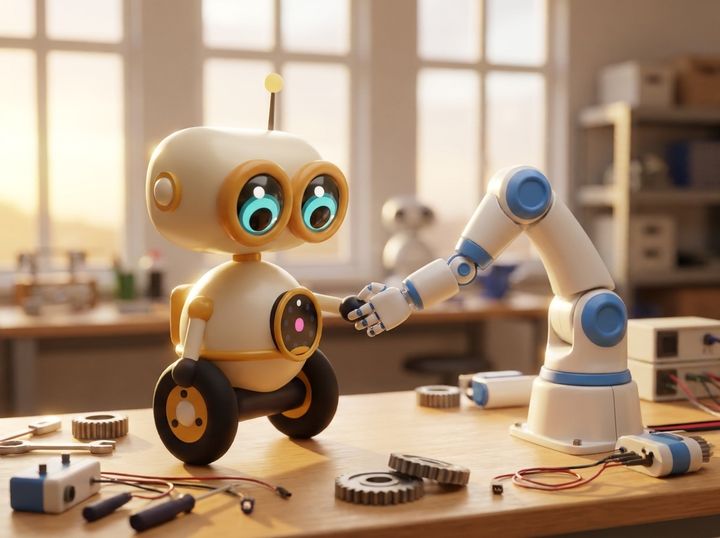
The robot is Rollo, named after a rollout: one run of an agent through its environment. Scroll and it explores the bootcamp with you. Drag to look around.

02 · Base camp · What research assisted means

You do not write this paper alone

In most mentorship programs you do the work by yourself and meet a mentor once a week. Here a Vizuara research team works on your paper with you, and two mentors guide it from the first week to the final review.

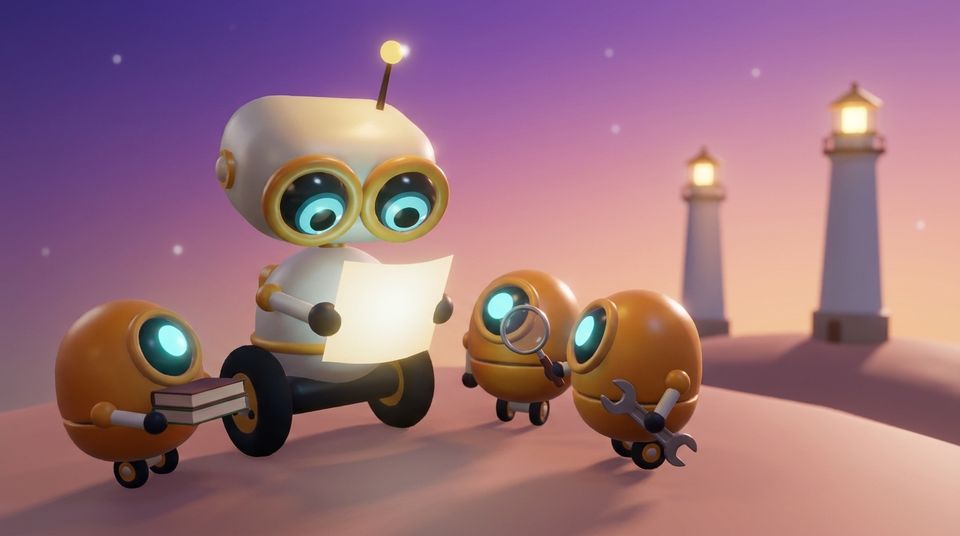
Rollo holding up a glowing sheet of paper, three small helper robots around it and two lighthouses behind

Four parties around one paper

The researcher

You

You choose the problem, run experiments and write.

Vizuara research team

Researchers on your topic

We draft, run experiments of our own and review every result you send.

Two mentors

Dr. Sreedath Panat and Dr. Rajat Dandekar

They set the direction, approve the method and give the final review.

Built in house

Research agents

They help our team search papers, log runs and check numbers.

What we do for you, step by step

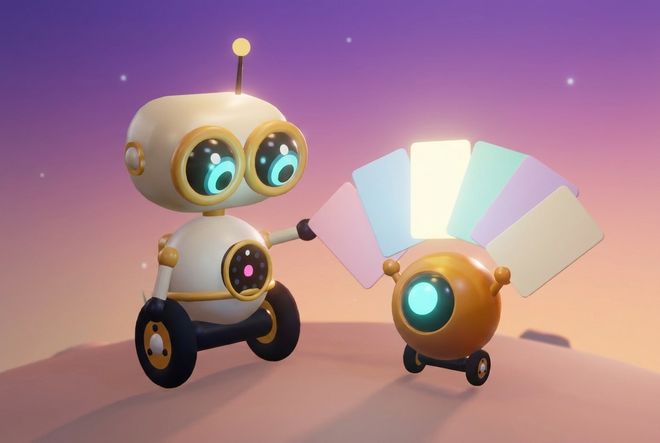
Rollo choosing one glowing card from a fan held out by a helper robot

We help you pick a problem

You get a list of open questions, each small enough for two months, and choose one.

Rollo and a helper robot reading a large book on a stack of books

We read the literature with you

Our team maps the related work and writes the first draft of your literature review.

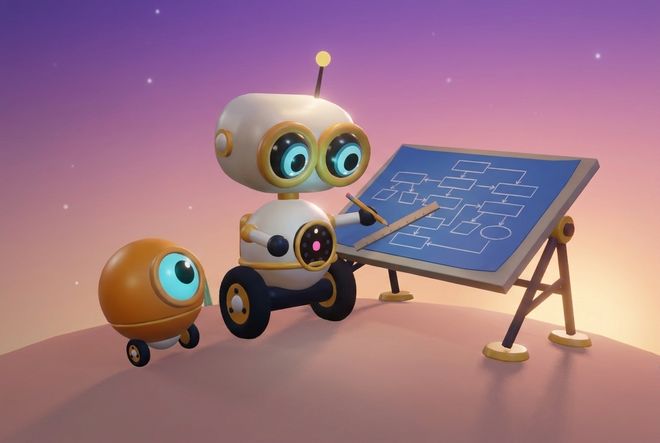
Rollo and a helper robot drawing a diagram at a drafting table

We design the method together

We draft the method and the experiment plan. The mentors approve them before any experiment starts.

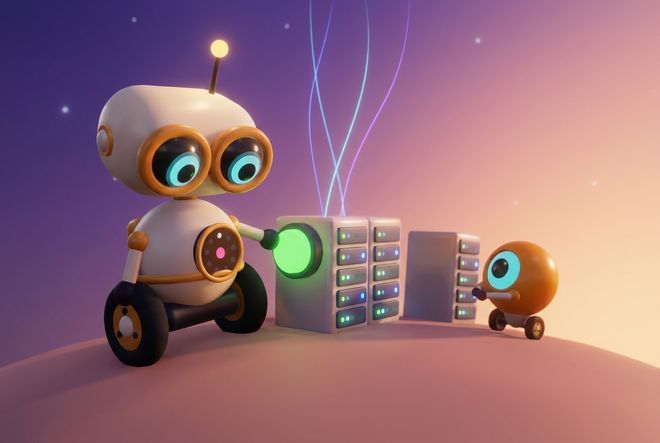
Rollo pressing the start button on a rack of servers while a helper tends another rack

We run experiments alongside yours

You run yours. We run our own on Vizuara's GPUs.

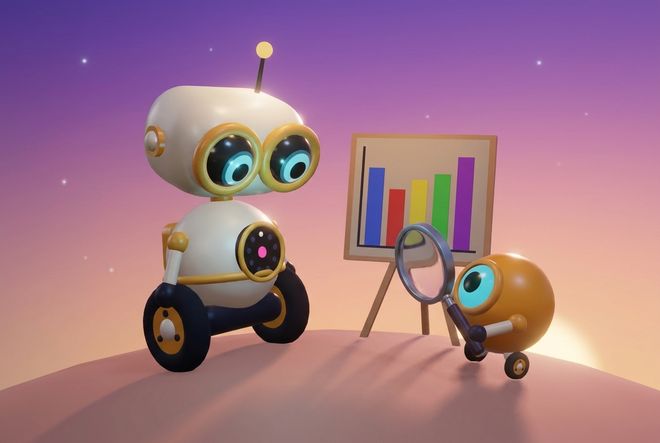
A helper robot checking a bar chart with a magnifying glass while Rollo watches

We check every result

Numbers and plots are verified against the run logs before they go into the paper.

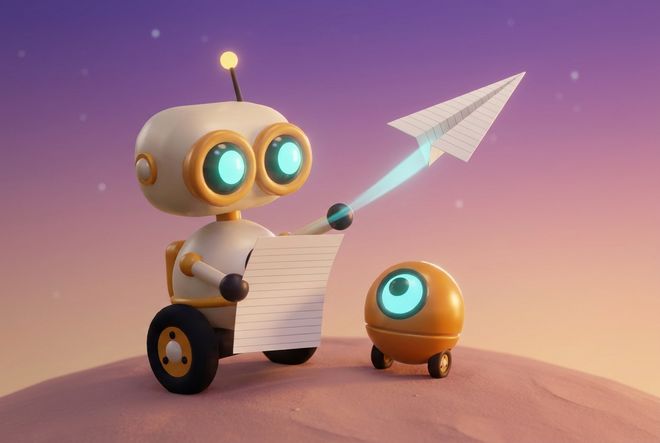
Rollo and a helper robot holding a finished paper as a paper aeroplane takes off

We write the paper with you

In the format of the venue we choose together. The mentors give the final review.

03 · 04 · The frontier · Open problems

Twelve open problems, each one a possible paper

Each question is open, starts from a paper accepted at a major venue in 2025 or 2026, and is small enough for two months on modest compute.

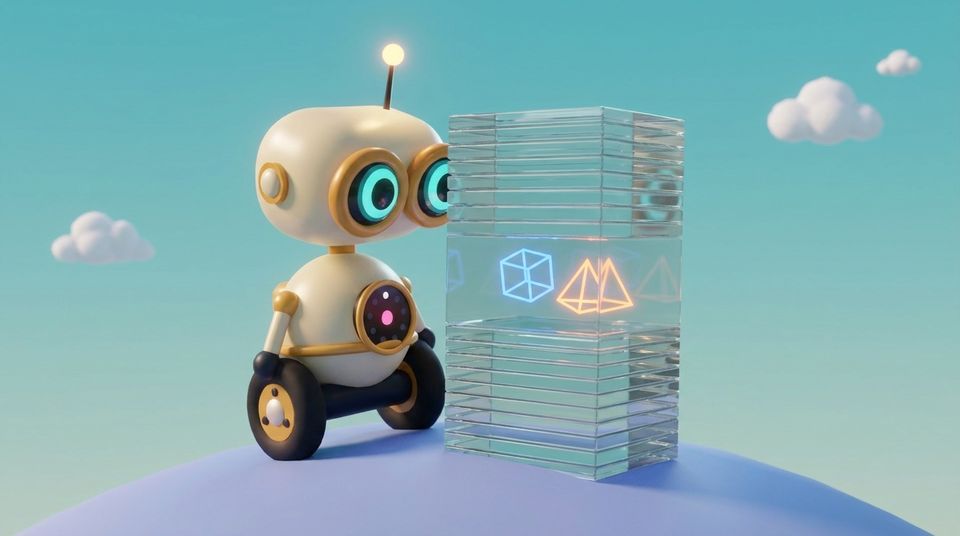
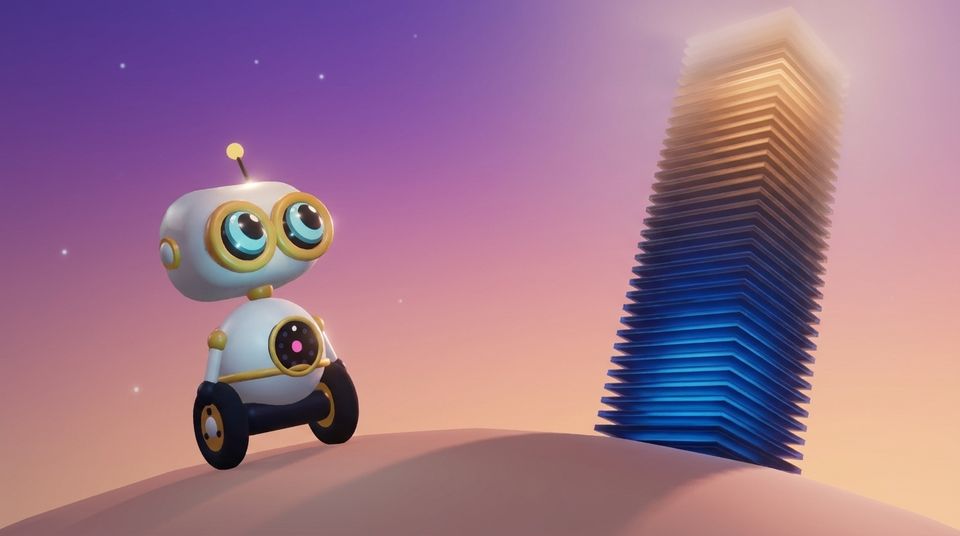
Rollo looking up at a tall tower of thin glowing layers

How deep should the network be when the data is fixed?

Very deep networks help self-supervised RL when the agent can keep collecting experience. Train the same contrastive critic at depths 4 to 64 on offline goal-conditioned datasets and find where the benefit stops.

A possible result: success rate against depth on fixed data, and the depth where it stops rising.

Starts from: 1000 Layer Networks for Self-Supervised RL · NeurIPS 2025, Best Paper
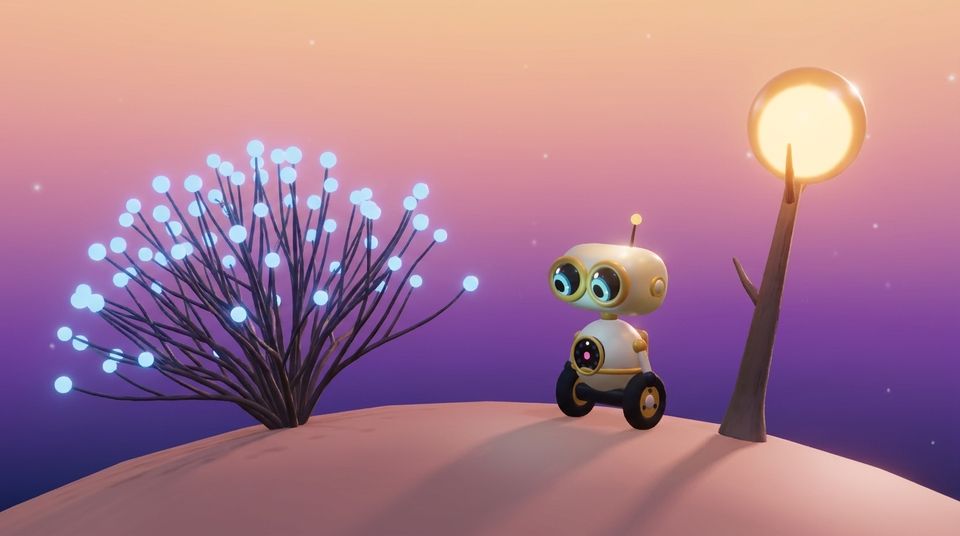
Rollo between a bushy tree with many small lights and a bare trunk with one large light

What does RL add to a language model?

At large k, base models can score higher on pass@k than their RL-trained versions. Check whether that crossover appears for a small model trained on one narrow task, and whether an exploration bonus slows the narrowing.

A possible result: pass@k curves for a base model and its RL-trained version on one task, with and without the bonus.

Starts from: Does RL Really Incentivize Reasoning Capacity in LLMs Beyond the Base Model? · NeurIPS 2025, Best Paper Runner-up
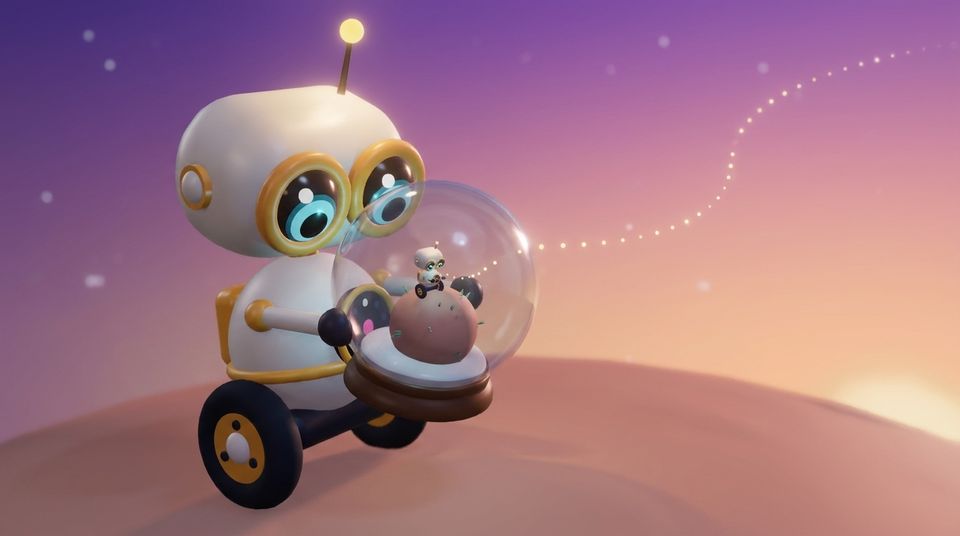
Rollo peering into a snow globe that holds a tiny copy of its planet and of itself

Where does a small world model stop being able to plan?

LeWorldModel trains a JEPA world model of about 15M parameters from pixels on one GPU. Measure how planning success falls with horizon and with goals outside the training data, and whether a little data collected by the planner repairs it.

A possible result: a map of where planning breaks, by horizon and by distance from the training data.

Starts from: LeWorldModel · NeurIPS 2026
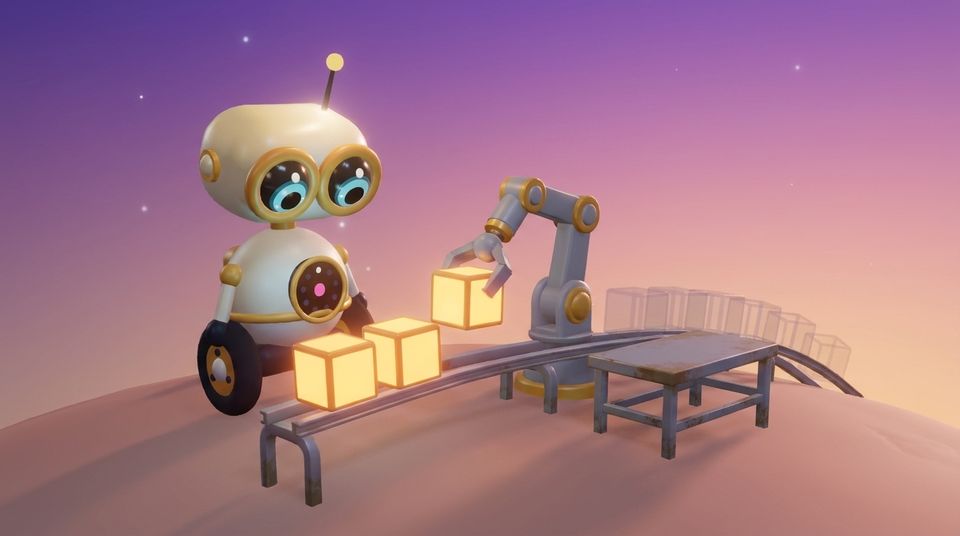
Rollo watching a robotic arm place glowing cubes in a row, the first three bright and the rest only outlines

How many action tokens does a robot policy need?

Ordered action tokens let a policy decode only a prefix and trade inference cost against precision. Choose the prefix length at each timestep, for example from token entropy, and measure success rate and latency.

A possible result: a rule that picks the prefix length at each step, with its cost in success and its gain in speed.

Starts from: OAT: Ordered Action Tokenization · RSS 2026, Outstanding Paper finalist
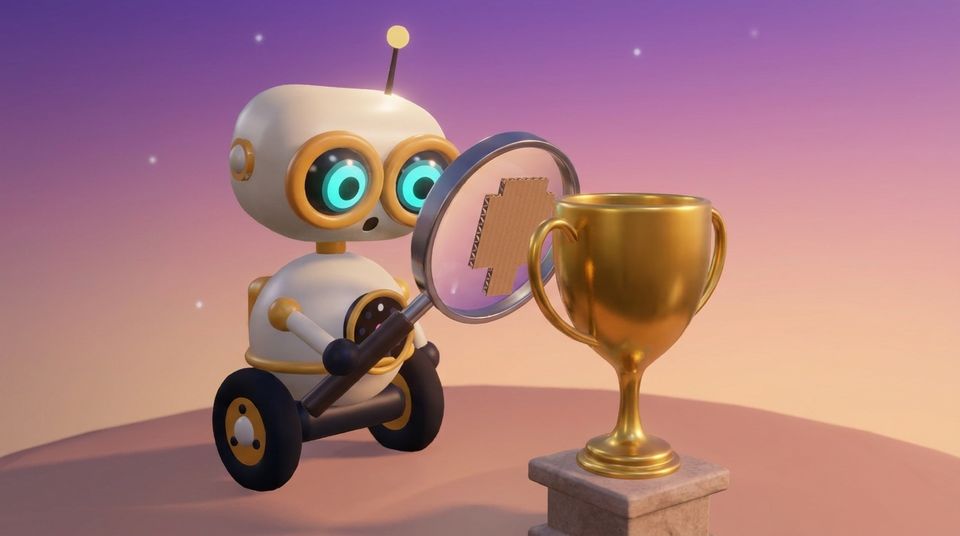
Rollo holding a magnifying glass to a golden trophy that turns out to be partly cardboard

What are manipulation benchmarks measuring?

A recent audit found that a small probe with no language encoder scores near the state of the art on LIBERO. Apply the same four diagnostics to a benchmark the paper did not audit.

A possible result: an audit of one more benchmark, showing which reported gains survive the four checks.

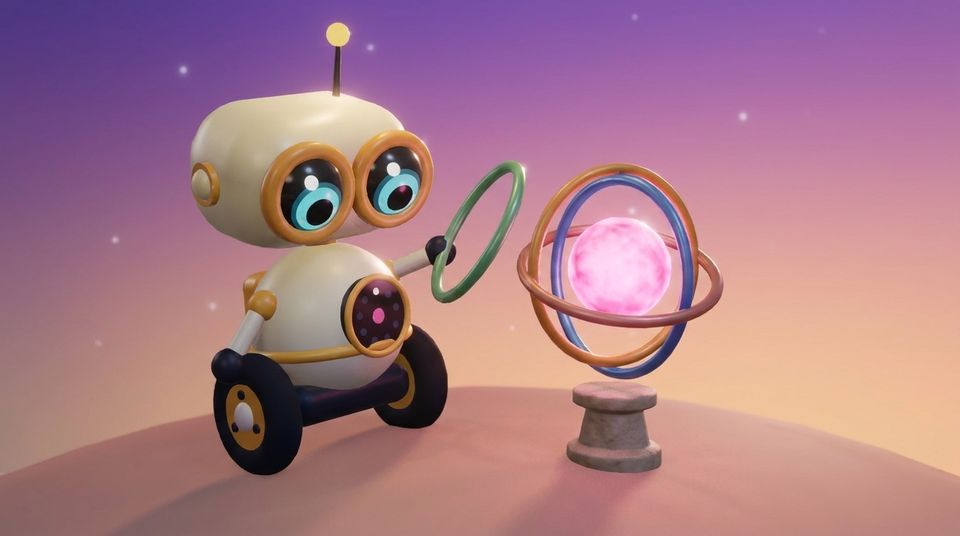
Rollo lifting one of three rings away from a glowing ball that the rings hold steady

Which stabiliser does the work in fast off-policy RL?

FlashSAC bounds weight, feature and gradient norms so that off-policy training stays stable with larger models. Remove the three bounds one at a time on two tasks with different action dimensions.

A possible result: an ablation that shows which of the three bounds matters, and at which scale.

Starts from: FlashSAC · RSS 2026, Outstanding Paper
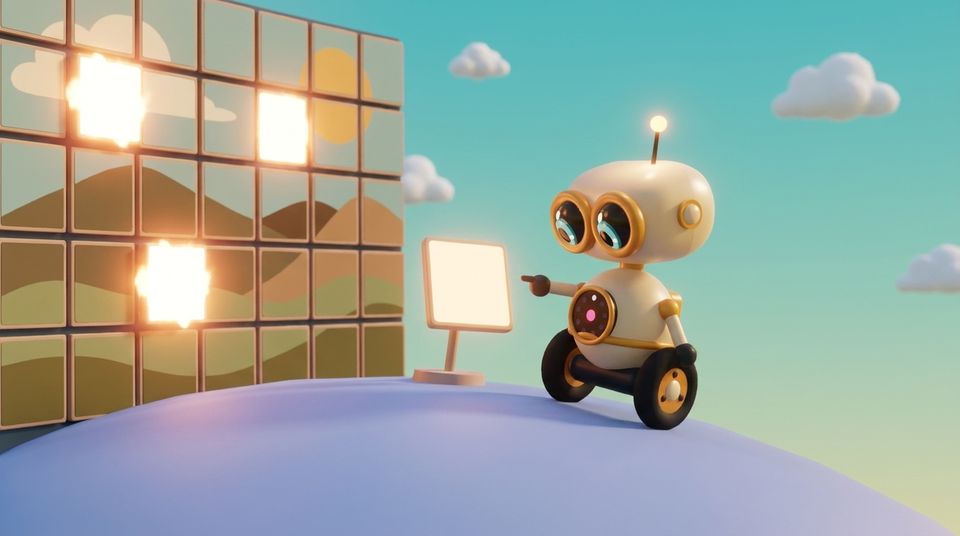
Rollo pointing at a spare blank tile beside a mosaic wall in which three tiles blaze white-hot

Do registers appear in every Vision Transformer?

In CLIP and DINOv2, a few neurons push high-norm activations onto outlier tokens, and moving them into an extra token at test time cleans up the feature maps. Check whether the same neurons exist in DINOv3 or in a backbone trained by reconstruction.

A possible result: a yes or no for two more model families, with feature maps before and after.

Starts from: Vision Transformers Don't Need Trained Registers · NeurIPS 2025, Spotlight
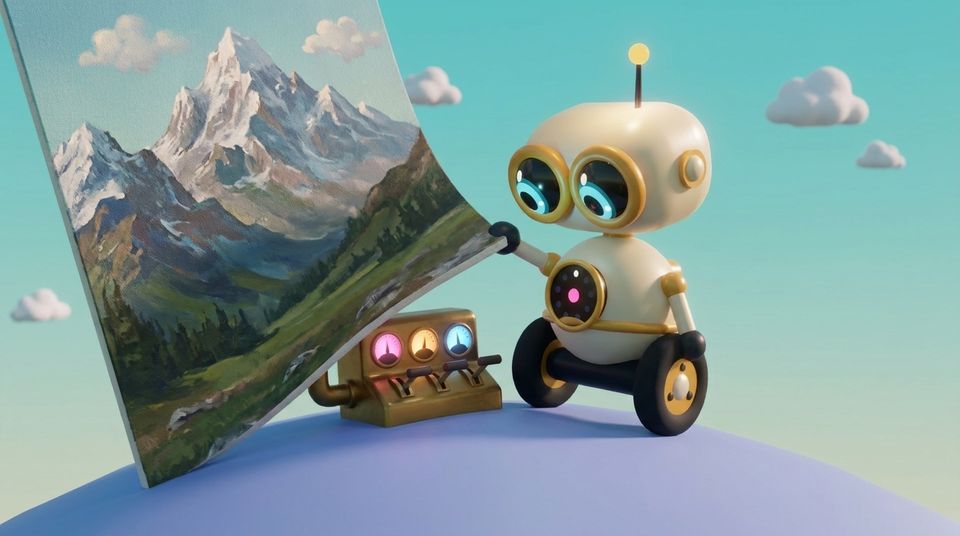
Rollo lifting the corner of a painted landscape to find a small machine with three glowing dials behind it

When does a JEPA recover the variables behind the pixels?

Theory says LeJEPA recovers the world's latent variables up to a linear map, at the population optimum and for Gaussian latents. Measure how that degrades with sample size and with latents that are not Gaussian.

A possible result: how recovery of the latent variables degrades with fewer samples and with non-Gaussian latents.

Starts from: When Does LeJEPA Learn a World Model? · NeurIPS 2026
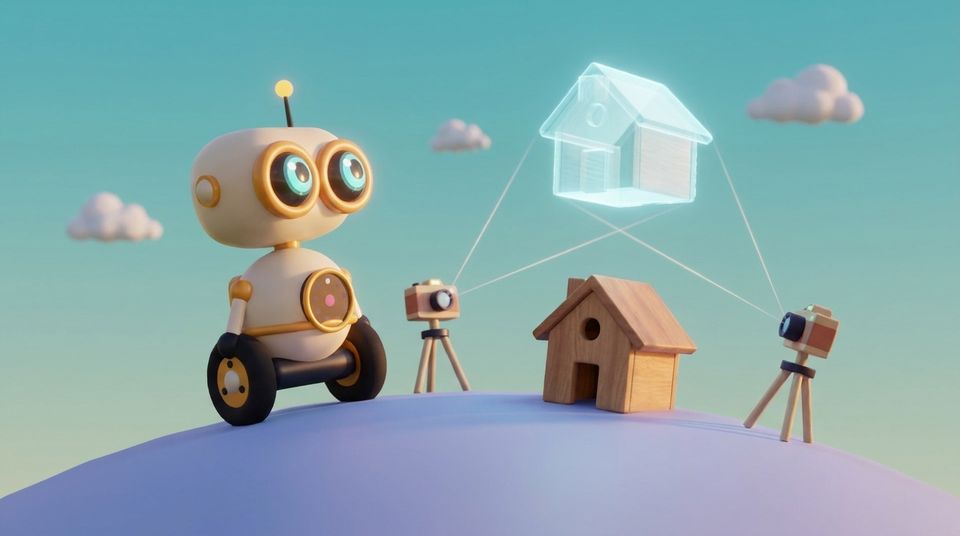
Rollo between two cameras whose beams build a glowing three-dimensional copy of a toy house

Which layers carry pose, and which carry depth?

Depth Anything 3 predicts geometry from any number of views with one plain transformer. Probe the layers of its small model, then measure how accuracy falls as the overlap between views shrinks.

A possible result: a layer-by-layer map of pose and depth, and accuracy against view overlap.

Starts from: Depth Anything 3 · ICLR 2026, Oral
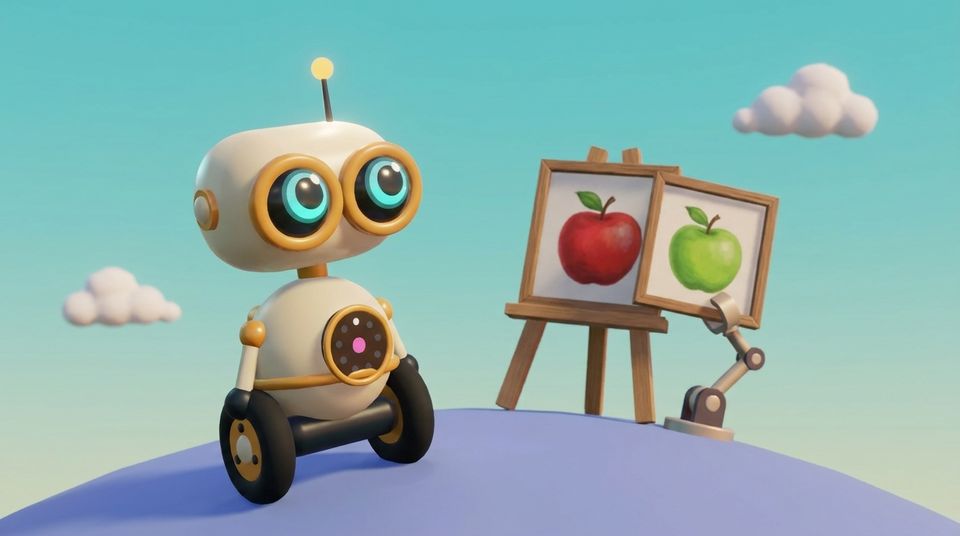
Rollo looking away while a small arm swaps a painting of a red apple for one of a green apple

Do vision-language models look at the image again?

When the image is swapped for a similar one in the middle of reasoning, open VLMs mostly miss it. On a 7B to 8B model, try to repair this without a user instruction, for example by encoding the image again when the model says it is checking.

A possible result: a fix that makes the model notice the swap, measured on the released image pairs.

Starts from: Are VLMs Seeing or Just Saying? · ICML 2026, Oral
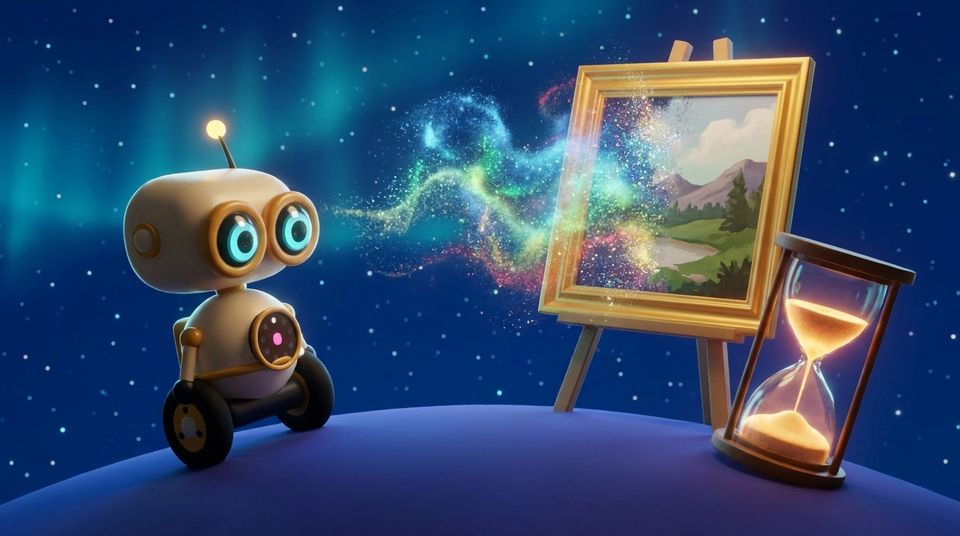
Rollo watching an hourglass while glowing dust settles into a half-finished painting

When does a diffusion model begin to memorise?

Training has two timescales. Good samples appear early, and memorisation emerges later, at a time that grows with the size of the dataset. Test whether that holds for a small diffusion transformer, or with flow matching.

A possible result: the two timescales measured again for a transformer, or for flow matching.

Starts from: Why Diffusion Models Don't Memorize · NeurIPS 2025, Best Paper
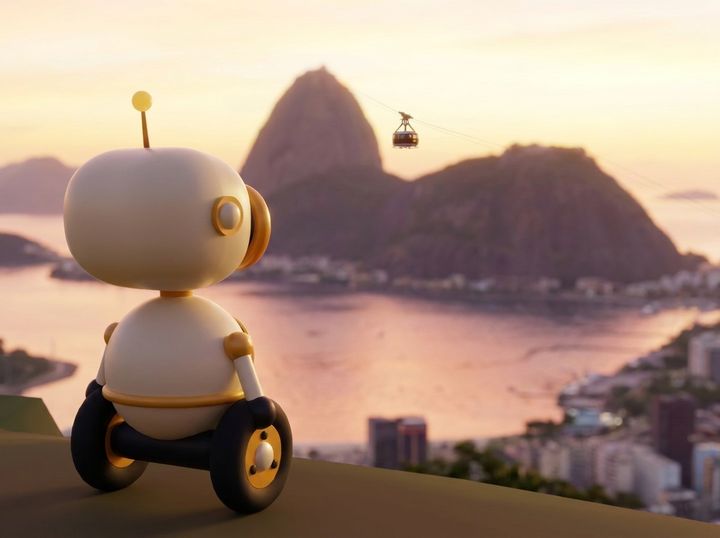
1 / 6
05 · Paper tree · Where the questions come from

Built on recent papers from the top venues

The open problems start from 21 papers accepted at NeurIPS, ICML, ICLR, CVPR, ECCV, CoRL and RSS in 2025 and 2026. Four of them won a best paper award.

Open the full reading list

We checked each acceptance in November 2026 against the venue's program or awards page, or the authors' own record.

Reinforcement learning and robot learning
Computer vision
What came out of this program
10papers accepted at
NeurIPS 2026 workshops

This year, ten papers from Vizuara's research program were accepted at NeurIPS 2026 workshops. They came out of the same way of working this bootcamp uses. One of them studies how RL post-training of language models is evaluated.

  • What pass@k Cannot Measure: A Construct-Validity Stress Test for RL Post-Training EvaluationReliable Evaluation for Language Models; Transitioning from Pretraining to Post-Training
  • When the Simulator Is Wrong, Do Better Derivatives Improve Decisions?Simulation for Science workshop

Two of the ten accepted papers. Read the announcement ›

06 · Relay · How the two months run

Nine weeks, from a question to a manuscript

  1. Weeks 1 to 2
    20 Nov to 3 Dec

    Choose and plan

    You pick a problem. We draft the literature review and the method with you, and the mentors approve the plan.

  2. Weeks 3 to 7
    4 Dec to 7 Jan

    Experiment

    You run experiments and send results. We review each one, suggest the next step, and run experiments of our own.

  3. Weeks 8 to 9
    8 Jan to 20 Jan

    Write

    We write the paper with you. The mentors give the final review, and the manuscript is ready to submit.

Entirely asynchronous

No meetings to wait for

There are no scheduled calls. Work passes back and forth between you and our team on the Vizuara Research Mentorship Portal, so feedback begins when your result arrives.

07 · Lighthouses · Lead mentors

Two mentors on every team

Both mentors set the direction of each project, agree the method before the experiments start, and give the final review of the paper.

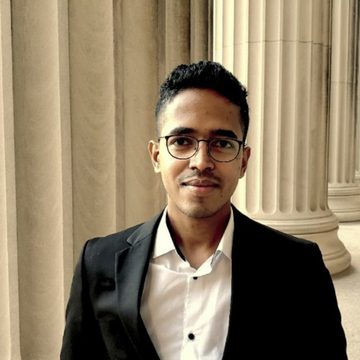
Dr. Sreedath Panat

Dr. Sreedath Panat

PhD, MIT · Co-founder, Vizuara

Sreedath works on vision-language models, robotics and transformer architectures. He holds a PhD from MIT and a BTech from IIT Madras.

Dr. Rajat Dandekar

Dr. Rajat Dandekar

PhD, Purdue · Co-founder, Vizuara

Rajat works on reinforcement learning from human feedback, policy optimisation and agentic systems. He holds a PhD from Purdue and a BTech from IIT Madras.

08 · Launch pad · Where the paper goes

Eight venues, each with a deadline after the bootcamp

Every paper deadline below falls after 20 January 2027, so a finished manuscript can go straight to one of them. We choose the target with you.

Deadlines marked expected follow each venue's last cycle and will be confirmed when the 2027 calls are published. ICML 2027 also asks for an abstract by 14 January, before the bootcamp ends, so that route needs an early start. CoRL and NeurIPS have not opened their 2027 pages yet, and both reviewed on OpenReview in 2026.

09 · The gate · An honest note

What you are paying for

No one can guarantee that NeurIPS, ICML, CVPR or any other venue will accept a paper, and no credible program will promise it. Peer review exists so that an independent community decides whether a piece of research meets its standard.

What you pay for is the research effort itself: the attempt to turn a difficult open problem into publishable scientific work, with a team that designs experiments, develops methods, evaluates them rigorously and keeps iterating until the paper is ready.

Who pays for compute

Our experiments

The experiments our team runs are paid for from Vizuara's own budget.

Your experiments

We mostly provide tools such as Google Colab. Anything beyond that is yours to arrange.

Topic size

We only take on topics whose experiments fit modest compute. If a problem needs more than that, for example training a large vision-language-action model from scratch, we cannot take it on, however interesting it is.

Enroll

Join Batch 1

The group is small, because both mentors work with every team personally.

Early-bird price
₹95,000

The early-bird price holds until 16 November 2026, 11:59 PM IST. From 17 November, the price is ₹1,25,000.

0days
00hours
00min
00sec
left at the early-bird price
  • Personal mentorship from Dr. Sreedath Panat and Dr. Rajat Dandekar
  • A Vizuara research team assigned to your topic
  • First drafts of the literature review, methodology and experiment plan
  • Result reviews, suggested improvements and experiments run by our team, on our budget
  • The Vizuara Research Mentorship Portal for the full two months
  • A target venue chosen with you, and a manuscript by 20 January 2027
Enroll now for ₹95,000

Compute for your own experiments beyond tools such as Google Colab is not included.
Batch 1 runs from 20 November 2026 to 20 January 2027 · Entirely asynchronous · Questions? Write to research@vizuara.com

Before you enroll

Is it really entirely asynchronous?
Yes. There are no scheduled calls. All of the work moves through the Vizuara Research Mentorship Portal, so you can work from any time zone, and each response begins when your work arrives rather than at the next meeting.
Who does the research, me or your team?
Both. You choose the topic, work on the drafts, run experiments and write. Our team prepares the first drafts of the literature review, the methodology and the experiment list, reviews your results, and runs experiments too. Dr. Sreedath Panat and Dr. Rajat Dandekar mentor the work throughout.
Should I pick an RL topic or a vision topic?
You choose one topic, and it can sit on either side or between the two, as vision-language-action models and world models do. We share the list of topics at the start, and you pick from it.
Will my paper be accepted?
We cannot promise that, and no credible program can. Peer review is an independent decision. What we commit to is the research effort: the team, the experiments, the evaluation and the iteration needed to produce a manuscript worth submitting.
Who pays for compute?
The experiments our team runs are paid for from Vizuara's own budget. For your own experiments, we mostly provide tools such as Google Colab, and anything beyond that is yours to arrange. We only take on topics whose experiments fit modest compute, so a problem that needs large-scale training is not one we can take on.
What do the research agents do?
They map the related work with a citation trail for every claim, run and log experiments on our GPUs, check results against those logs before anything goes into the paper, and keep the full history of your project on the portal. They assist our research team, and the team decides what reaches your paper.
Which venue will my paper go to?
We choose it with you, from the list above, based on your topic and on how strong the results are by the middle of January. Every venue on the list has its paper deadline after 20 January 2027.
I took Vizuara's RL or vision courses. Does this build on them?
The topics sit on the same ground as Vizuara's courses: RL in Production, VLA and World Models, Modern Robot Learning, Vision Transformers and the JEPA Workshop. What you learned there applies directly to the research here.
What does it cost, and until when is the early-bird price?
₹95,000 until 16 November 2026, 11:59 PM IST. From 17 November, the price is ₹1,25,000. Batch 1 begins on 20 November 2026.

Two months. One paper. A team behind it.

Batch 1 begins on 20 November 2026. The early-bird price holds until 16 November.

Enroll for ₹95,000